
Why Healthcare Advertising Requires a Photographer Who Understands Clinical Environments
Healthcare advertising is not lifestyle photography in scrubs.
It requires awareness, sensitivity, and precision. It requires the ability to move inside active environments without disrupting them.
Hospitals and clinics are not controlled sets. They are operational systems. Patients are being treated. Staff are under pressure. Time matters.
A healthcare campaign only works when the photographer understands that reality.
Healthcare Is an Active Environment
When I step into a clinical space, whether for a scout or on shoot day, I immediately assess three things.
How light moves through the room.
Where the camera can travel dynamically.
What obstacles could flatten the image.
Medical spaces are filled with reflective surfaces, tight angles, overhead lighting, and equipment that can either enhance or overwhelm a frame.
You have to be ready to pivot quickly.
Efficiency is not optional. It is respect for the environment.
The Biggest Mistake Brands Make
The most common mistake I see is hiring based on trend instead of alignment.
Healthcare brands do not need what is fashionable. They need what feels credible.
There is a difference between photographing people in healthcare settings and understanding the emotional weight of those spaces.
Real patients are not props.
Medical professionals are not models.
When an image feels staged, audiences sense it immediately.
Authenticity is not aesthetic. It is relational.
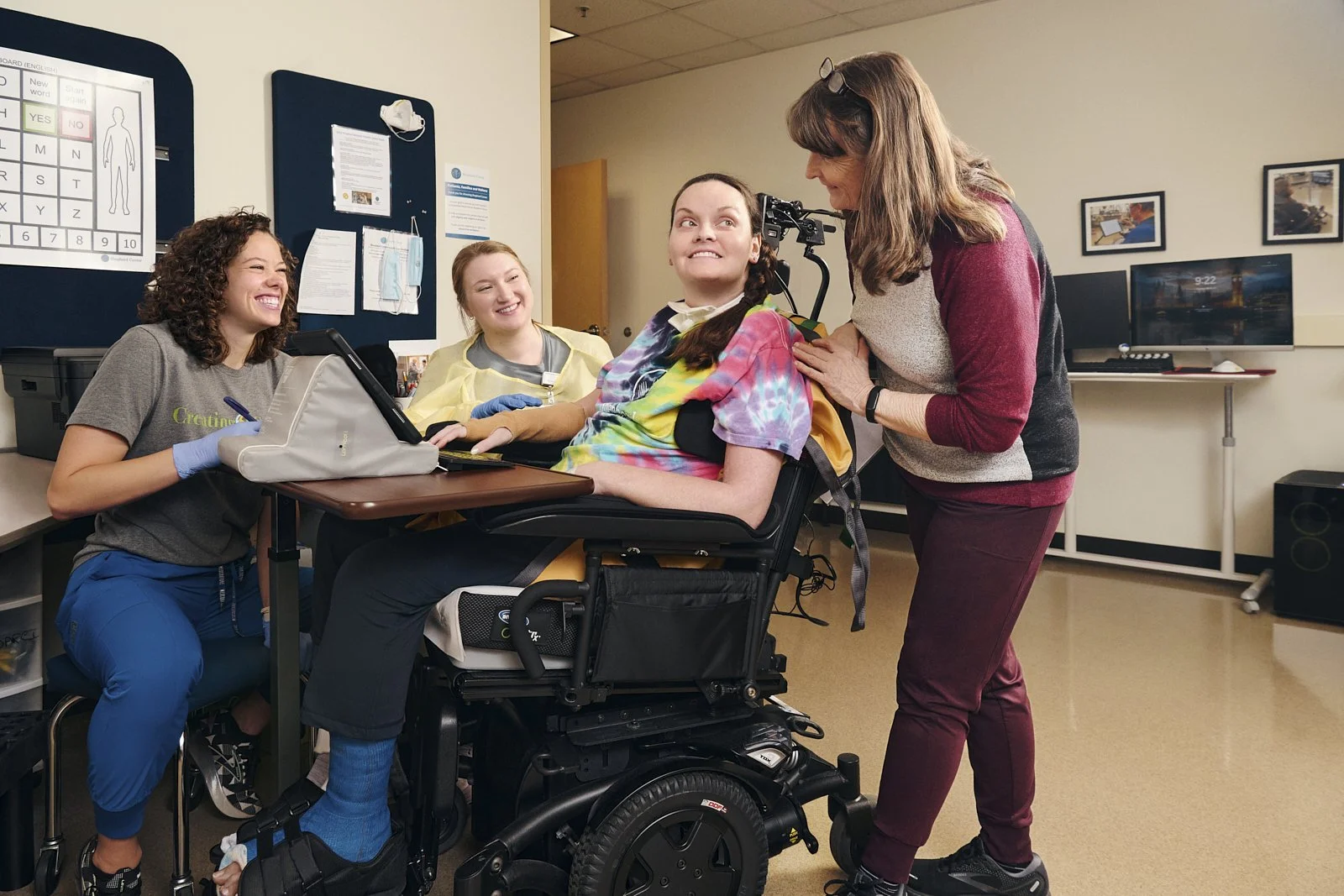
Real patient and care team shot for Shepherd Foundation by ELEY.
Working With Real Patients and Models
Healthcare advertising today often prioritizes real people, and for good reason. Audiences respond to images that feel lived in.
Working with real patients requires preparation beyond lighting setups. People move through the world with different physical abilities and sensory needs. Understanding your talent, whether through casting or conversations at the start of the day, keeps the space warm and connection focused.
No one should feel like an object.
With models, I cast individuals who feel everyday and relatable. Then I invite them to collaborate in shaping the character they are portraying.
In both cases, the goal is engagement and presence.
When talent feels safe and involved, trust shows up in the frame.
What Trust Looks Like Visually
Trust in healthcare imagery lives in nuance.
It is in the way two people lean toward each other.
It is in the subtlety of expression.
It is in the natural rhythm of interaction.
It is in light that wraps gently instead of overpowering.
Before the shoot, trust is built through clear treatments and alignment with agency and client goals.
On set, it is built through efficiency and calm leadership.
In the final images, it is visible in the absence of performance.
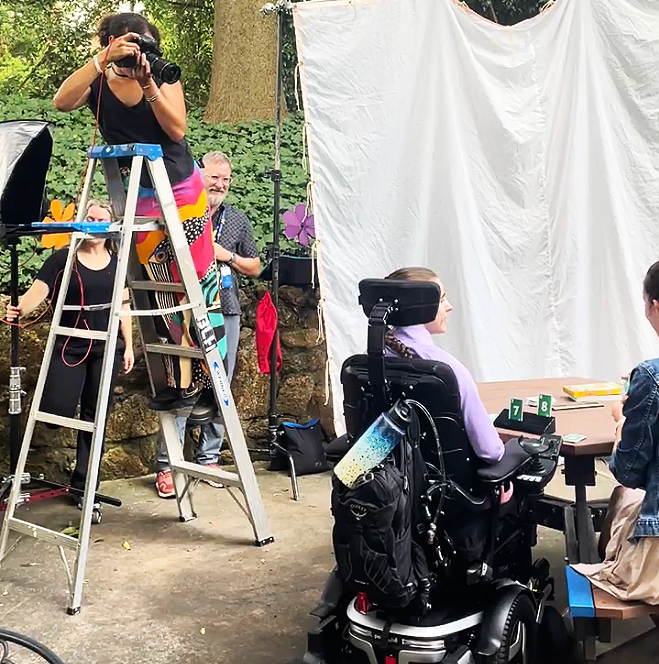
BTS blending environmental and artificial lighting to covey a natural bright and airy atmosphere
Lighting Clinical Environments
Clinical lighting does not need to be flat or sterile.
I create lighting scenarios that elevate the space while maintaining realism. Airy tonality. Clean dimension. Thoughtful contrast.
The goal is not to dramatize. It is to shape the environment so it feels hopeful, human, and intentional.
Unexpected lighting choices, when done carefully, differentiate healthcare campaigns without sacrificing credibility.
What Healthcare Marketing Teams Actually Care About
Before a shoot, marketing teams usually ask:
Will this disrupt operations?
Will it align with our brand language and color system?
Will the concept translate clearly to our audience?
Afterward, what they mention most often is:
Efficiency.
Creativity.
Clear direction.
Strong connection with crew and talent.
Healthcare productions require leadership that balances empathy with decisiveness.
That balance shows in the images.

Final deliverable for optomitrist advertisment UAB Callahan Eye
Looking for a Healthcare Advertising Photographer?
If you are searching for a healthcare advertising photographer, the real question is not about gear.
It is about approach.
Can they move confidently inside active clinical spaces?
Can they build trust quickly?
Can they adapt under pressure?
Can they align creative vision with brand strategy?
Healthcare advertising demands more than aesthetic execution.
It demands awareness.
When that awareness is present, the imagery does not just look credible. It feels credible.
And in healthcare, that distinction matters.
Are you planning a healthcare campaign?
If you are developing a hospital rebrand, integrated campaign, or patient-centered storytelling initiative, I am happy to discuss approach, production strategy, and visual direction.
You can reach out to me directly at eley@eleyphoto.com to start the conversation.